
Organic phosphorus for Argentine crops
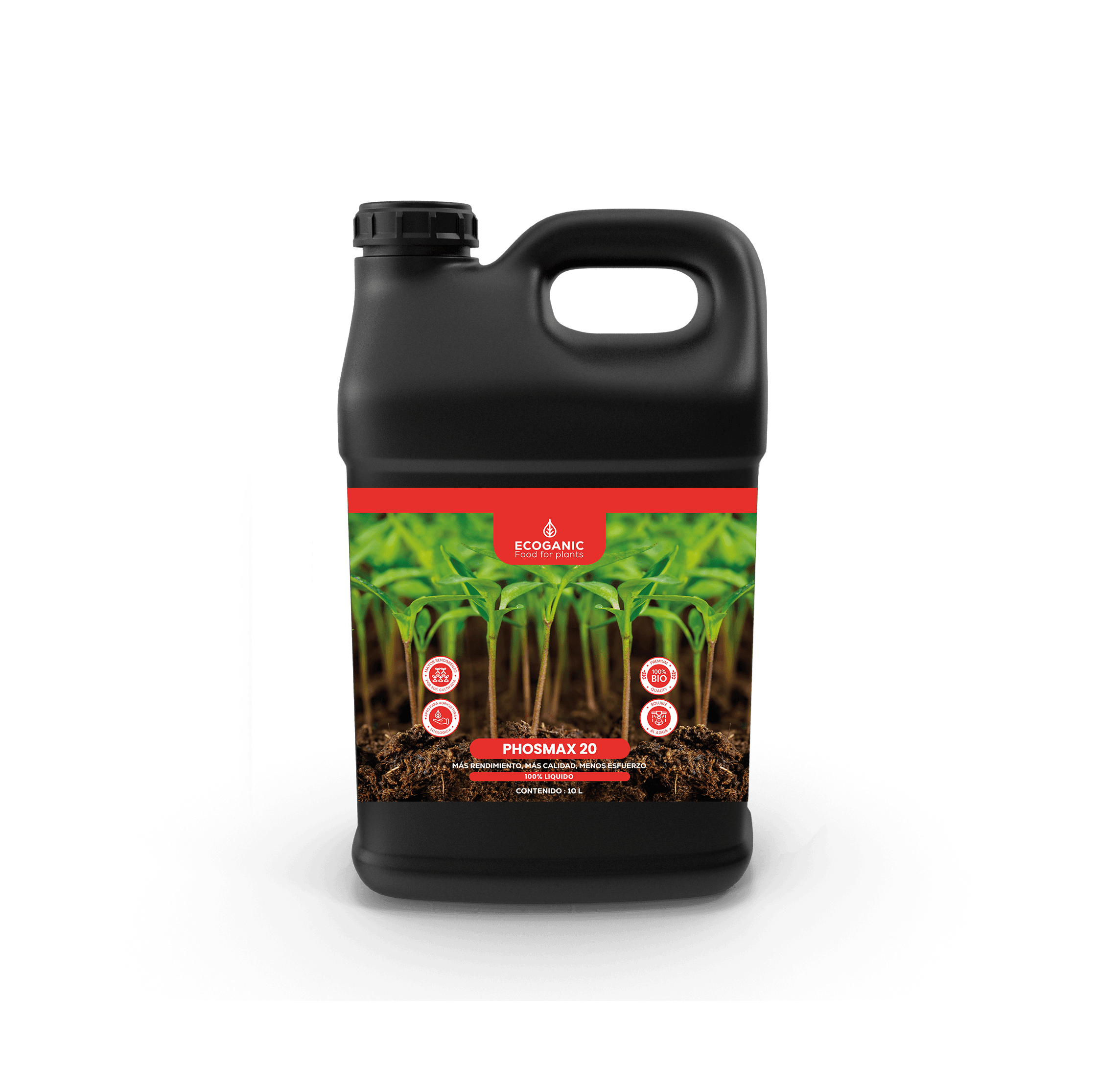
Phosphorus is the nutrient that activates plant startup: without sufficient phosphorus available during establishment and flowering, crop yield is compromised from the outset. Ecoganic PHOSMAX 20 provides 20% P₂O₅ in 100% soluble liquid form, reinforced with unicellular algae extract, to guarantee highly bioavailable phosphorus nutrition suitable for certified organic farming.
20%
P₂O₅
100%
liquid soluble
Chloride-free
safe for soil
CE 2018/848
certified
What is organic phosphorus and why does it matter?
Phosphorus is essential for cellular energy transfer (ATP/ADP), root development and flower and fruit formation. Conventional phosphorus fertilizers such as MAP (monoammonium phosphate) or TSP (triple superphosphate) supply inorganic phosphorus that can become locked in the soil by pH, calcium or aluminum — a frequent phenomenon in the acid soils of the NEA and in soils with high calcification in central-western Argentina.
The organic phosphorus in PHOSMAX 20 is formulated to maximize bioavailability. Reinforced with freshwater unicellular algae extract (chloride-free), both foliar and root absorption is significantly improved compared to conventional inorganic phosphates, which often do not exceed 15-20% efficiency.
In high-yield Argentine crops such as soybean or corn, correct phosphorus nutrition at establishment (in-furrow or via fertigation) is one of the factors most directly correlated with the number of pods or cobs formed per plant. PHOSMAX 20 allows reinforcing this phosphorus nutrition in both irrigated and rainfed crops, with complementary foliar applications at critical stages.
Phosphorus functions in the plant
Cellular energy (ATP/ADP)
Phosphorus is the central component of ATP, the cell's 'energy currency' that drives all metabolic processes.
Root development
Stimulates root elongation and branching, improving soil exploration and absorption of water and nutrients.
Flowering and fruit set
Involved in RNA formation needed for pollen grain protein synthesis and ovule development.
Critical phosphorus stages in the crop
Phosphorus cannot be recovered after the fact: peak demand periods are short, precise windows.
Establishment / Transplanting
The highest phosphorus impact phase. The forming root system demands ATP to elongate and colonize the soil. A PHOSMAX 20 application with irrigation water or via fertigation accelerates rooting and reduces the establishment period.
Flowering
Phosphorus activates the synthesis of RNA and proteins needed for pollen grain formation and fruit set. Phosphorus deficit at flowering reduces the fruit set rate even under optimal water conditions.
Grain fill / Fruit bulking
In cereals, phosphorus is key to translocating assimilates to the grain. In fruit trees and vegetables, the ATP generated by the ADP/ATP cycle regulates sugar accumulation and final fruit quality.
PHOSMAX 20: highly bioavailable organic phosphorus
One product, high concentration, multiple applications throughout the crop cycle.
Sinsacate, Córdoba · Argentina
Argentine crops and organic phosphorus
For each crop, organic phosphorus has a peak impact stage. Applying at the right time makes the difference in yield.
Frequently asked questions about organic phosphorus
What is the difference between organic phosphorus and conventional MAP/TSP?
MAP (monoammonium phosphate) and TSP (triple superphosphate) are granular inorganic phosphorus sources applied mainly to soil. Their main limitation is fixation: in soils with low pH (common in NEA and Mesopotamia, Argentina) or with excess calcium (soils of central-western Argentina), phosphorus becomes insoluble and unavailable to the plant. PHOSMAX 20 provides phosphorus in soluble liquid form, with unicellular algae extract that directly improves foliar and root absorption, independent of soil pH. Being suitable for fertigation, it allows splitting applications at peak crop demand moments.
Can PHOSMAX 20 be used in fertigation?
Yes. PHOSMAX 20 is a 100% cold-soluble liquid, chloride-free and sediment-free, designed to be compatible with drip and micro-sprinkler fertigation systems. It does not clog drippers or filters. It is added directly to the fertigation solution and is compatible with most nitrogen and potassium fertilizers (verify compatibility with phosphates in a prior jar test). Indicative dose in fertigation: 3-5 L/ha per application.
For which Argentine crops is organic phosphorus most important?
In Argentina, crops with the greatest response to soluble phosphorus application are: soybean (especially at establishment and R1), corn (V4-V6), wheat (establishment), potato (establishment and tuberization) and citrus (post-harvest for reserve loading). In Humid Pampa areas with moderate phosphorus availability soils, using PHOSMAX 20 as a complement to base phosphorus fertilization can improve yield by 8-15% depending on the plot's fertility history.
When is the critical moment to apply phosphorus in soybean?
In soybean there are two main critical moments: (1) Establishment — from sowing to V2-V3, when the root system is forming and needs phosphorus to develop root hairs and Bradyrhizobium symbiosis. (2) Stage R1 (flowering onset) — when the plant concentrates maximum energy demand (ATP) for flower formation and subsequent pod set. A foliar application of PHOSMAX 20 at R1 (200-300 cc/100L) complements base fertilization and can increase the pod-set index per node.
Is PHOSMAX 20 suitable for certified organic production in Argentina?
Yes. PHOSMAX 20 holds CE 2018/848 (European Organic Production Regulation) and NOP USDA certifications. In Argentina, SENASA-accredited certifying bodies (OCA, IMO, ARGENCERT, among others) recognize these international certifications as sufficient for approval under Argentine organic production regulations (Law 25.127 and SAGPyA Resolution 1286/93 and related rules). Always consult your certifying body before incorporating any new product into the program.
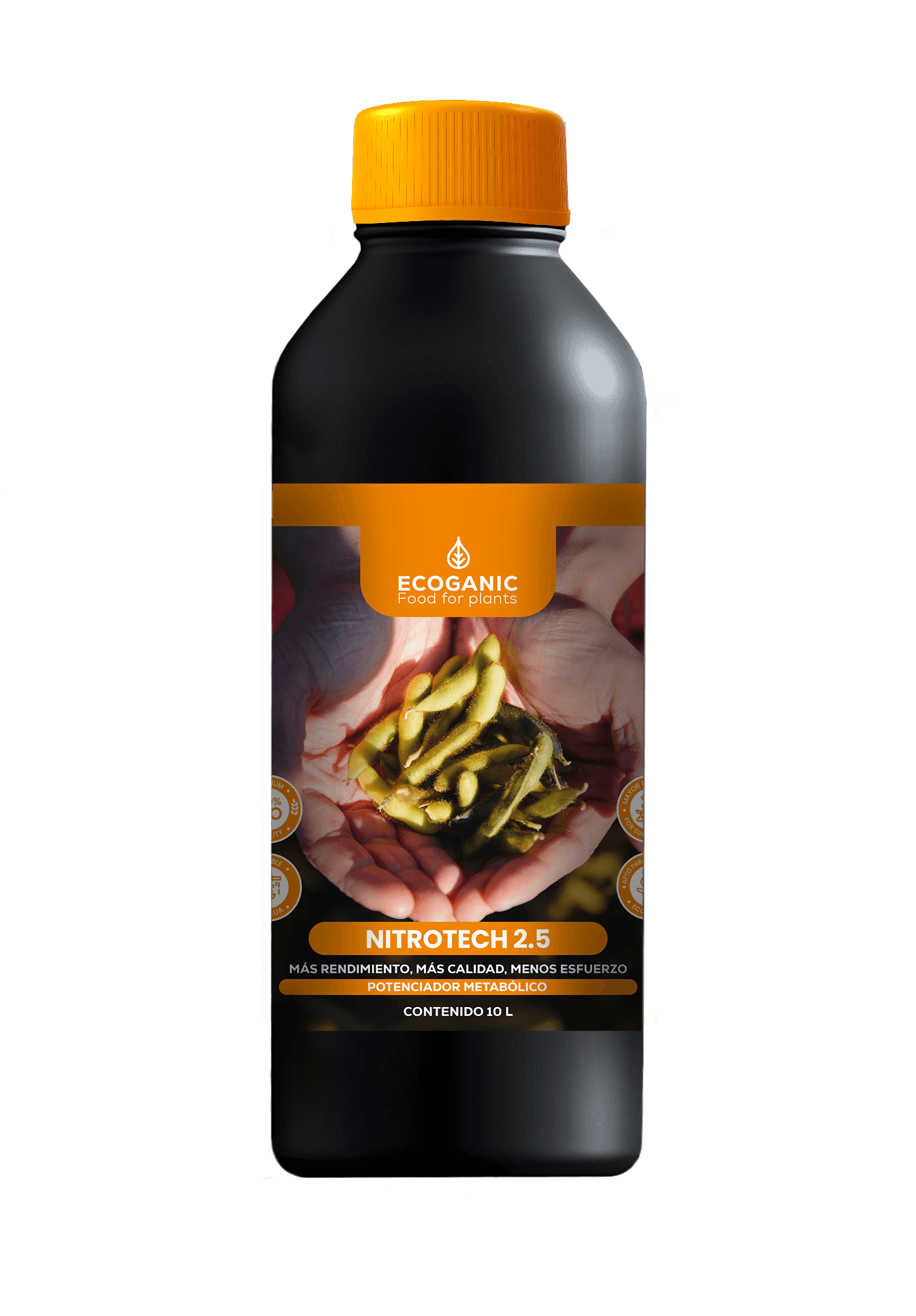
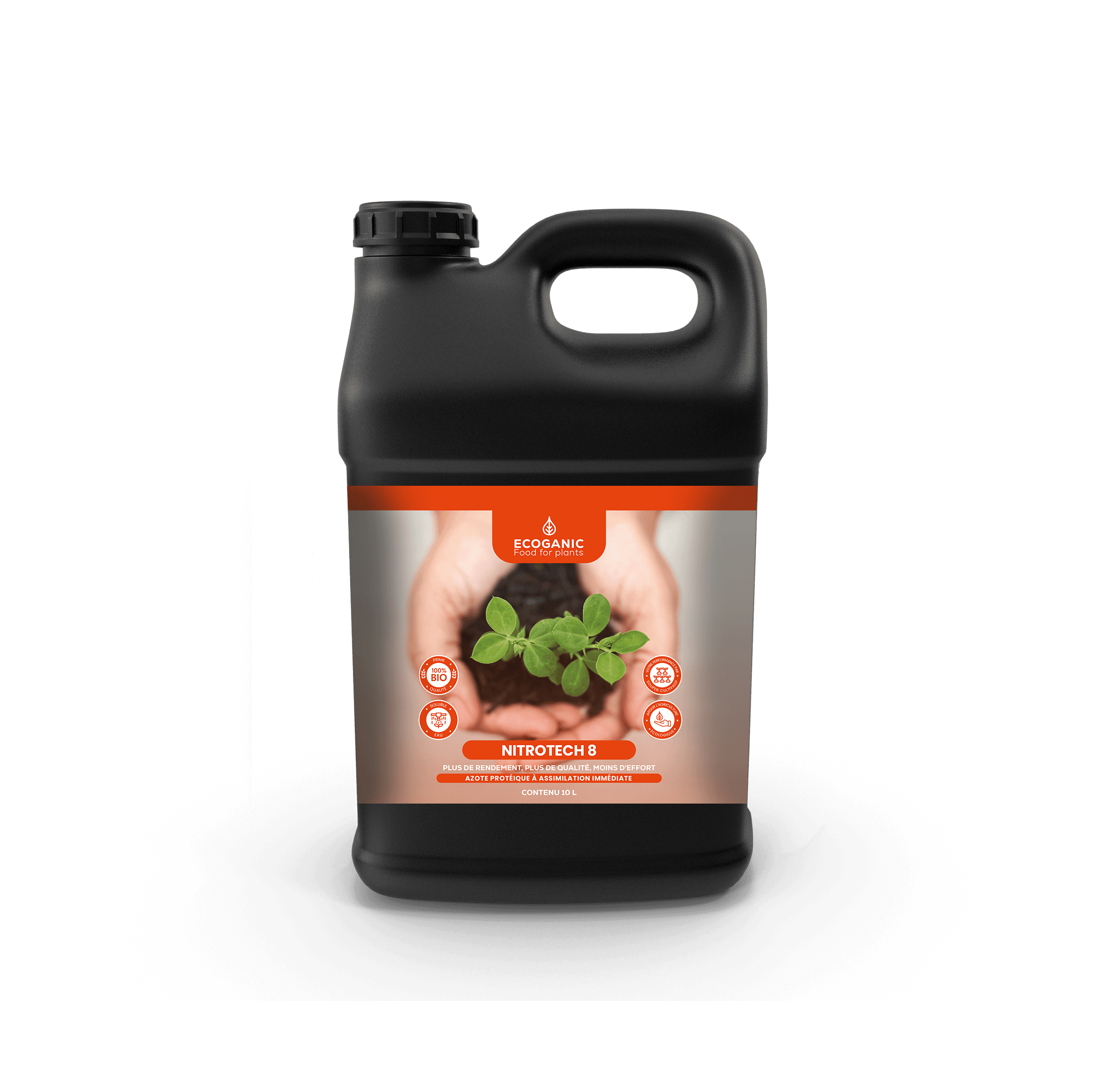
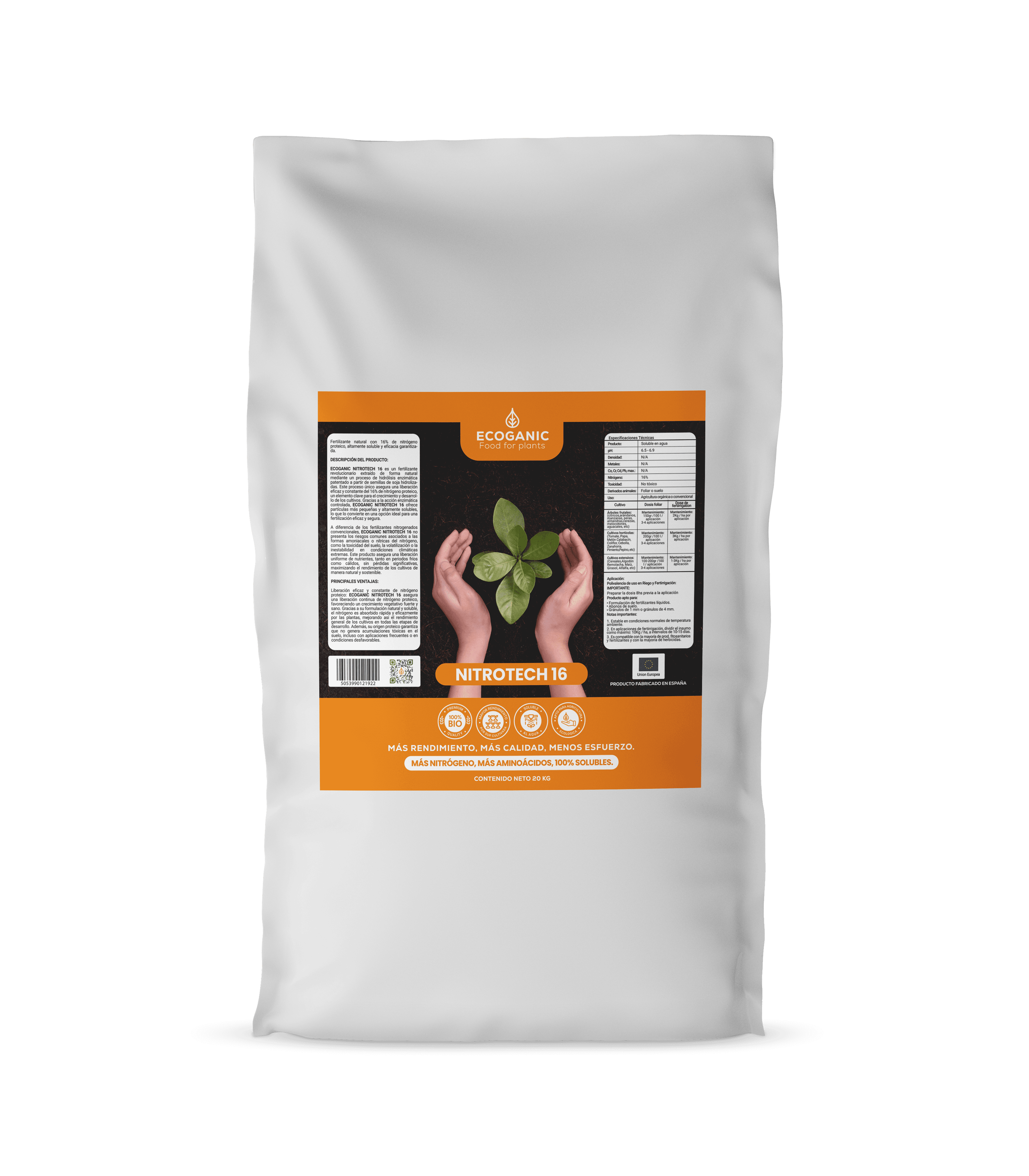
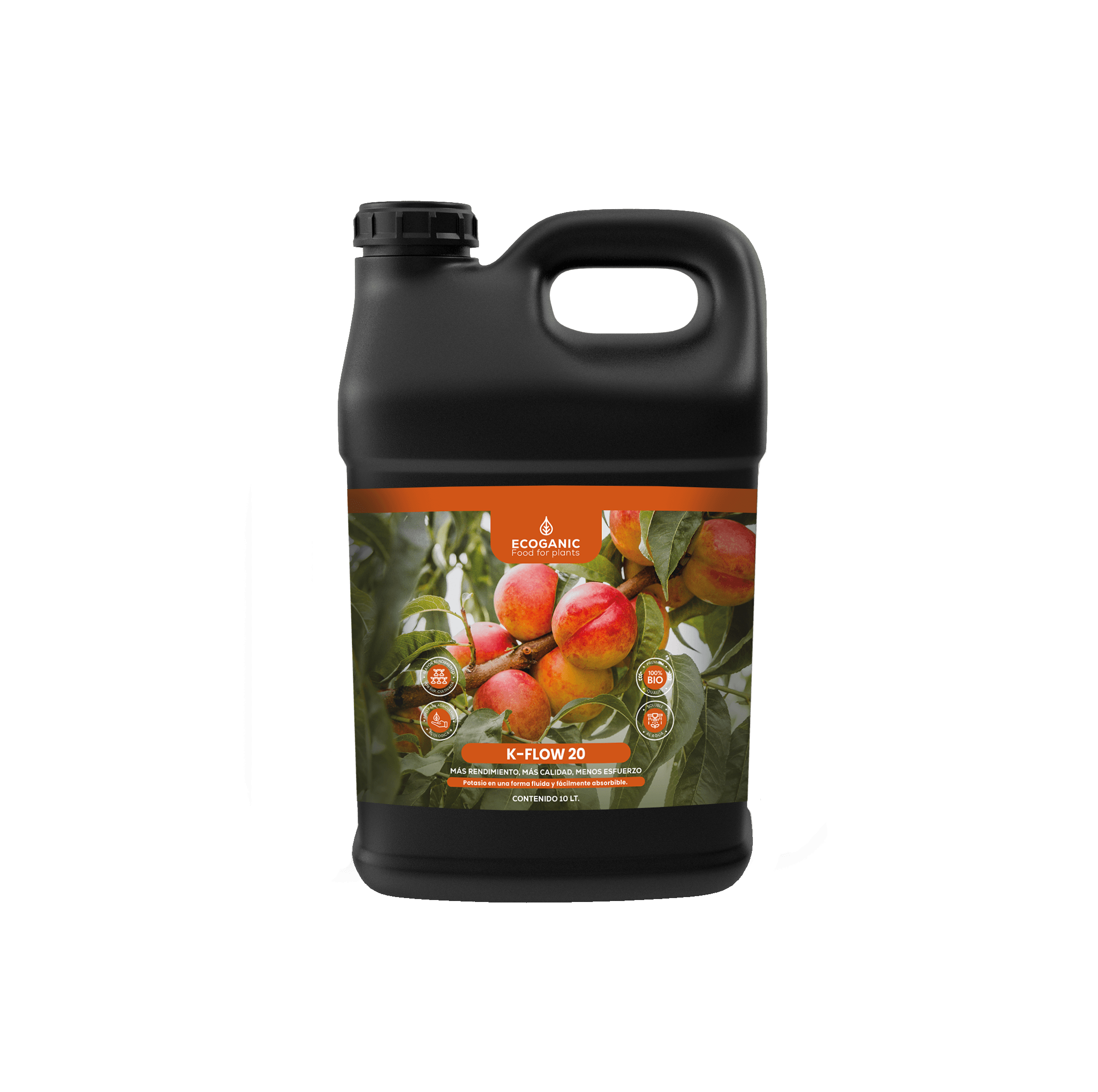
Complete your program with:
Ecoganic · Sinsacate, Córdoba
Need technical advice on phosphorus nutrition for your farm?
Ecoganic's technical team in Sinsacate, Córdoba, can help you design an organic phosphorus fertilization program tailored to your crops, soil and region of Argentina.