

Organic calcium for Argentine agriculture
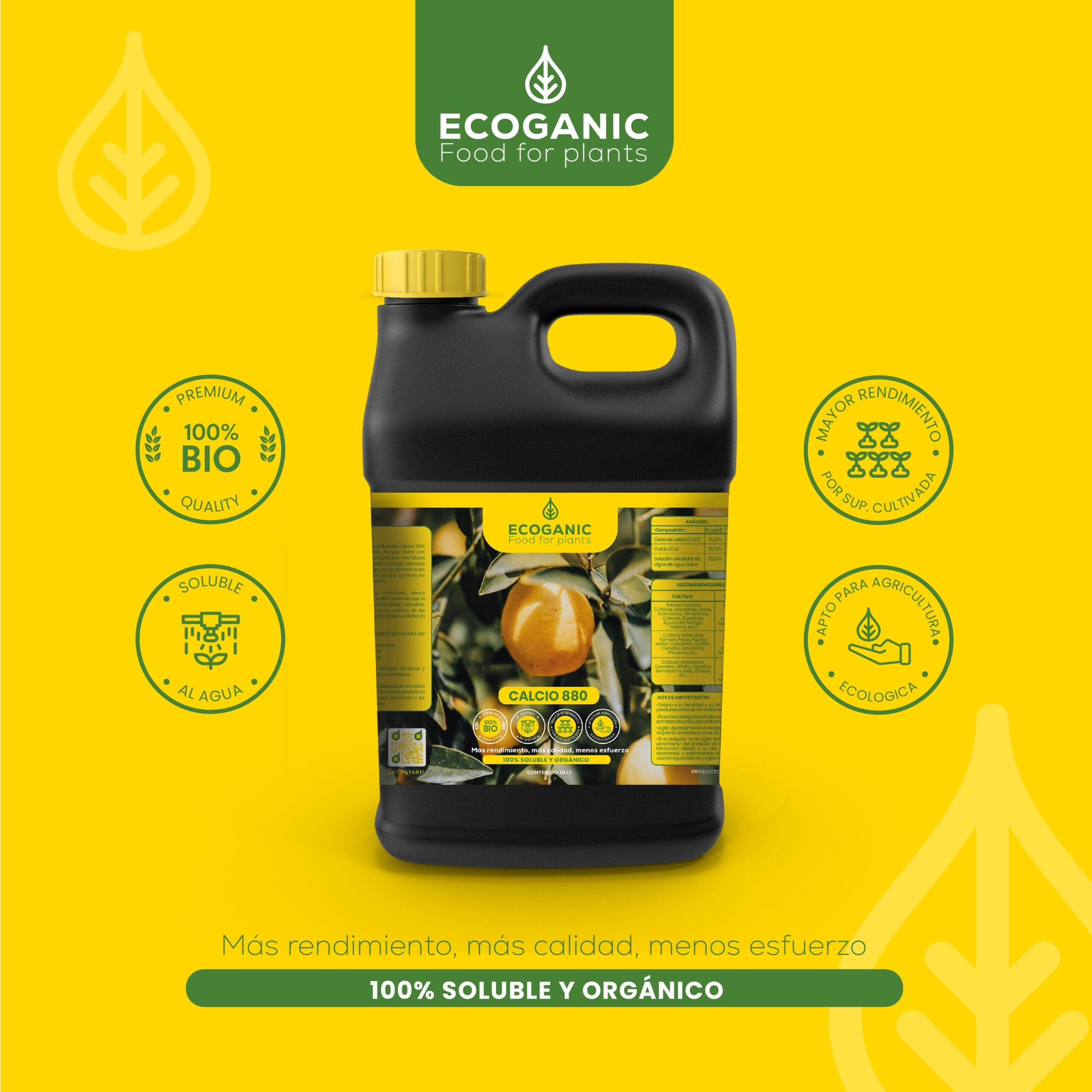
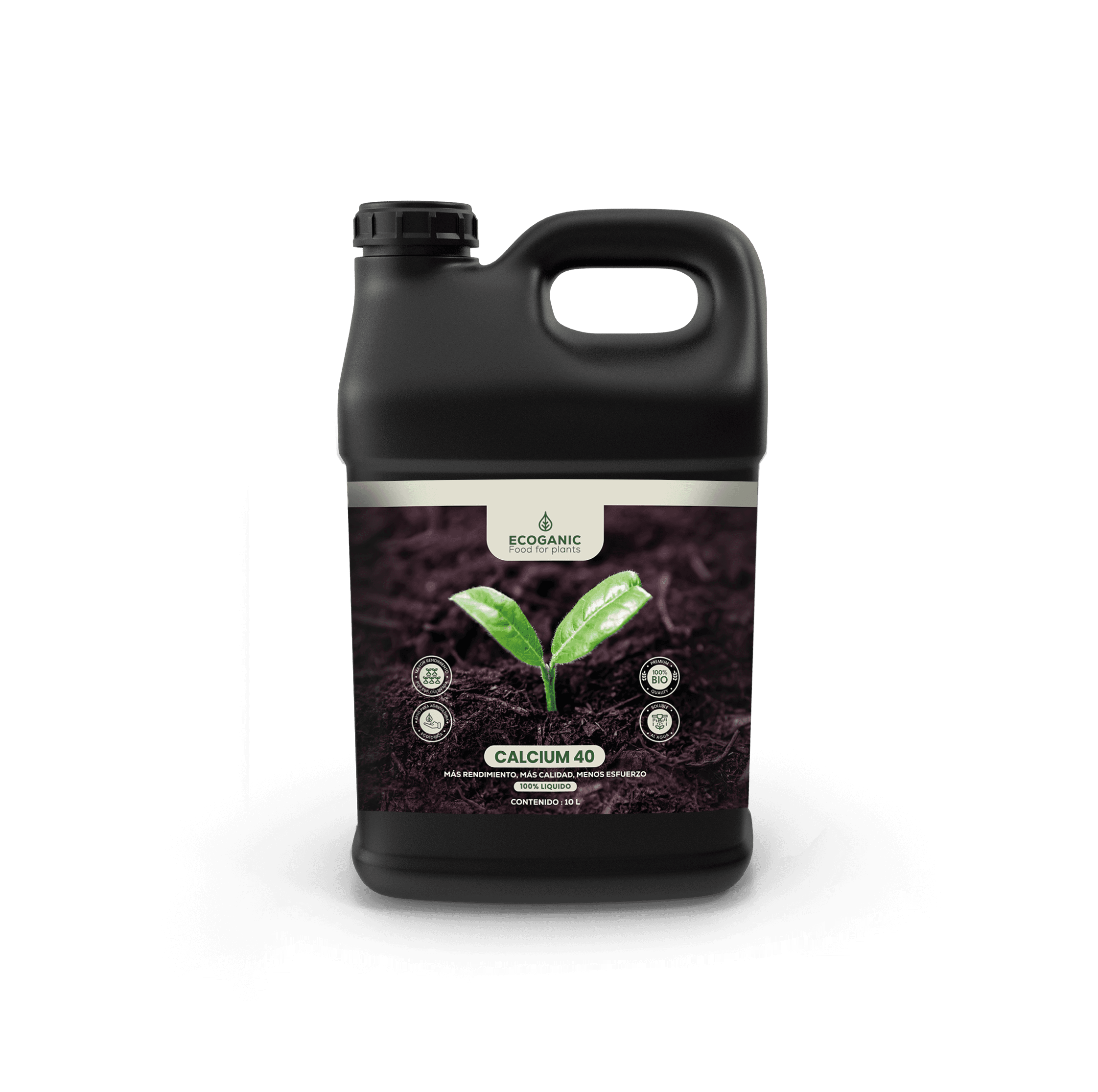
CALCIUM 40 is Ecoganic's organic calcium fertilizer in a stabilized suspension formulation: 40% CaO chloride-free and certified under Regulation CE 2018/848. Calcium is the structural nutrient par excellence — it forms cell walls and determines fruit firmness — but its mobility in the plant is very low. In Argentina, blossom end rot in tomato, bitter pit in apple and lack of firmness in blueberries and grapes are problems directly associated with Ca deficiency in the tissue.
40% CaO
Assimilable calcium
SC
Stable suspension
0 Cl⁻
Chloride-free
CE 2018/848
Organic certification
Why foliar calcium is irreplaceable even when the soil has calcium
Calcium in plant nutrition
Calcium performs structural functions that no other nutrient can replace: it is the main component of cell wall pectin (calcium pectate) and regulates membrane permeability. A cell wall with sufficient calcium produces firm fruits with less susceptibility to cracks, rots and handling damage. Ca deficiency in tissue is the direct cause of tomato blossom end rot, apple and pear bitter pit, lettuce tip burn and lack of firmness in grapevine and blueberries.
The central problem with calcium is its mobility: unlike nitrogen, potassium or phosphorus, Ca²⁺ moves almost exclusively through the transpiration stream in the xylem. This means that plant parts with low transpiration — sizing fruits, tips of young leaves — receive very little calcium even when soil levels are adequate. Foliar calcium applications during the rapid fruit growth phase are therefore essential, not an optional complement.
SC formulation — Concentrated suspension
CALCIUM 40 is formulated as a concentrated suspension (SC), a physical form that guarantees homogeneous Ca²⁺ distribution, greater foliar retention and better cuticular penetration than powder or low-concentration liquid formulations. The absence of chlorides makes it suitable for all sensitive crops and compatible with organic production under SENASA standards.
When do I apply foliar calcium?
Foliar calcium is not effective at any time. These are the phenological windows with the greatest response:
Flowering
Preventive application to strengthen reproductive tissues. Improves fruit set and reduces physiological drop.
Fruit set
Critical phase: fruit cells divide rapidly and Ca demand is at its peak. This is the moment of greatest preventive impact.
Sizing (early to mid)
Ca is incorporated into the cell wall during active growth. Applications at this stage reduce the risk of blossom end rot and bitter pit.
Pre-harvest
Firmness boost to improve post-harvest life, handling and transport resistance. Especially critical in blueberry, grape and tomato.
Argentine crops that benefit most from foliar calcium
Frequently asked questions
Why apply foliar calcium if the soil has calcium?
Calcium in the soil is not necessarily available calcium in the fruit. Ca²⁺ moves exclusively through the transpiration stream in the xylem: it reaches mature leaves (which actively transpire) well, but reaches fruits and rapidly growing young leaves very poorly, as they have low transpiration. This is why tomato blossom end rot occurs even when there is calcium in the soil: the rapidly growing fruit tissue does not receive sufficient Ca²⁺ in time. Foliar application with CALCIUM 40 bypasses this physiological bottleneck.
When is calcium most important in tomato?
In tomato, the critical period for calcium is from flowering to the beginning of fruit sizing. Blossom end rot develops when the fruit grows rapidly but the xylem flow to it is insufficient to supply the necessary Ca²⁺. Factors that worsen the problem are water stress (reduces transpiration flow), high temperature and high soil electrical conductivity. CALCIUM 40 applied foliarly from flowering, with repetition at fruit set and early sizing, significantly reduces incidence.
Can CALCIUM 40 be mixed with other fertilizers?
CALCIUM 40 in concentrated suspension formulation is compatible with most common foliar fertilizers, biostimulants and crop protection products. However, mixing with fertilizers containing high concentrations of sulfates (magnesium sulfate, manganese sulfate) or phosphate fertilizers should be avoided, as Ca²⁺ may precipitate. Before any new mixture, it is recommended to perform a small-volume compatibility test. Always consult the product data sheet.
Is it suitable for certified organic production under SENASA?
Yes. CALCIUM 40 has CE 2018/848 certification (European Organic Production Regulation) and contains no chlorides, heavy metals or chemically synthesized ingredients. It is compatible with permitted input protocols in organic production supervised by SENASA in Argentina. Certified producers must verify the product's registration in the use plan with their certifying body (LETIS, OIA, Argencert or others accredited by SENASA). CE 2018/848 certification is the international normative reference recognized by SENASA.
Which Argentine crops benefit most from foliar calcium?
The crops where foliar calcium generates the greatest return in Argentina are tomato (prevention of blossom end rot, the main cause of rejection in intensive production), blueberry (firmness for export to the US and Europe), pear and apple (prevention of bitter pit), grapevine (berry firmness in table and export varieties), citrus (firmness and post-harvest life) and strawberry (firmness and shelf life). In all these cases, soil calcium cannot supply the demand of actively growing tissue.

Ecoganic · Sinsacate, Córdoba
Calcium issues in your crops in Argentina?
CALCIUM 40 certified CE 2018/848. Compatible with organic production under SENASA. Formulated for Argentina's growing conditions.