

Plant-origin amino acids: the foundation of efficient organic fertilization
Plant-origin amino acids (free L-amino acids obtained by enzymatic hydrolysis of non-GMO soy and beet) are the central active ingredient in Ecoganic fertilizers. Unlike synthetic or animal-origin amino acids, plant L-amino acids are directly assimilated by the plant without additional energy expenditure, act as micronutrient chelators and are precursors to key phytohormones.
L-amino acids
100% bioactive form
100% plant
Non-GMO soy origin
No synthesis
Enzymatic hydrolysis
CE 2018/848
Organic certified
Foundation science
What are plant-origin amino acids?
Amino acids are the basic building blocks of proteins. In plants, 20 essential amino acids participate in the synthesis of enzymes, plant hormones, chlorophyll and structural tissues. When we talk about plant-origin amino acids in fertilization, we refer to free L-amino acids obtained by enzymatic hydrolysis of plant proteins — primarily non-GMO soy — in which the chiral molecular structure remains intact in its L-form.
The distinction between L-amino acids and synthetic (DL-racemic) amino acids is critical from an agronomic standpoint. Synthetic amino acids are racemic mixtures containing equal parts L-form and D-form. Plants can only directly use the L-form — the same one they produce naturally. The D-form must be converted to L through energy-consuming metabolic reactions before it can be used. Plant-origin amino acids (enzymatic hydrolysis, not acid hydrolysis) exclusively preserve the L-form, meaning 100% efficiency from the first moment.
L-form vs. DL-racemic
Direct N assimilation efficiency for the plant. DL-racemics require enzymatic conversion of the D-form before they can be used.
Ecoganic uses non-GMO soy protein as the primary source for its NITROTECH and BALANCE formulations. Enzymatic hydrolysis — unlike acid hydrolysis used in lower-quality products — fully preserves the L configuration and avoids formation of unwanted by-products. The result is a complete profile of free amino acids with concentrations ranging from 9% (FULVEX 50S) to 91.59% (NITROTECH 16).
Key amino acids and their function
Glutamic acid
Main nitrogen transporter in the plant — transit molecule for N from root to destination organs
Proline
Key osmoprotectant — accumulates in cells under osmotic or water stress (drought on the humid pampa)
Tryptophan
Direct precursor of indole-3-acetic acid (IAA), the most important plant auxin
Glycine
Chelating agent — forms stable chelates with Fe, Zn and Mn increasing their bioavailability
Mechanisms of action
How do amino acids work in the plant?
Direct assimilation — no energy cost
The plant absorbs L-amino acids without needing to synthesize them from scratch. Building an amino acid from nitrate requires 12 enzymatic steps consuming ATP. With free L-amino acids applied foliar or through fertigation, the plant accesses the finished form directly — freeing that energy for growth and production.
Micronutrient chelation
Amino acids form stable complexes (chelates) with micronutrients like iron (Fe²⁺/Fe³⁺), zinc (Zn²⁺) and manganese (Mn²⁺). An amino-mineral chelate has greater mobility in the soil and greater capacity to cross the cell wall than the free ion. Fe-glycinate is absorbed up to 3× more efficiently than ferrous sulfate at high pH conditions common in Argentine calcareous soils.
Phytohormone precursors
Tryptophan → indole-3-acetic acid (IAA): the main auxin regulating root growth and cell elongation. L-methionine → SAM → ACC → ethylene: the ripening hormone synthesis chain. Phenylalanine → phenylpropanoids → lignin and flavonoids: pathogen defense. Applying precursors directly avoids the metabolic bottleneck at high-demand moments.
Water stress tolerance
Proline accumulates in the cytoplasm under osmotic stress, acting as a compatible osmoprotectant that stabilizes proteins and cell membranes without interfering with metabolism. During drought years on the humid pampa, L-proline application at critical stages (R1-R3 soybean, VT maize) helps maintain cell turgor and reduce flower and grain abortion.
Directly assimilated organic N
Each amino acid contains organic nitrogen the plant can directly incorporate into its proteins without going through the nitrate reduction cycle (nitrate → nitrite → ammonium → glutamate), which consumes up to 12 ATP molecules per mol of N. This makes amino acid N more metabolically efficient than nitric or ammoniacal N under high-demand or stress conditions.
Foliar application timing
Foliar amino acid absorption is maximum during maximum transpiration, before stomatal opening reduces due to heat. In Argentina: foliar application in the early morning (6–9 h) or at dusk (19–21 h). Avoid application with leaf temperature above 30°C or wind conditions above 15 km/h.
Key timing: Apply in the early morning or at dusk, during maximum transpiration
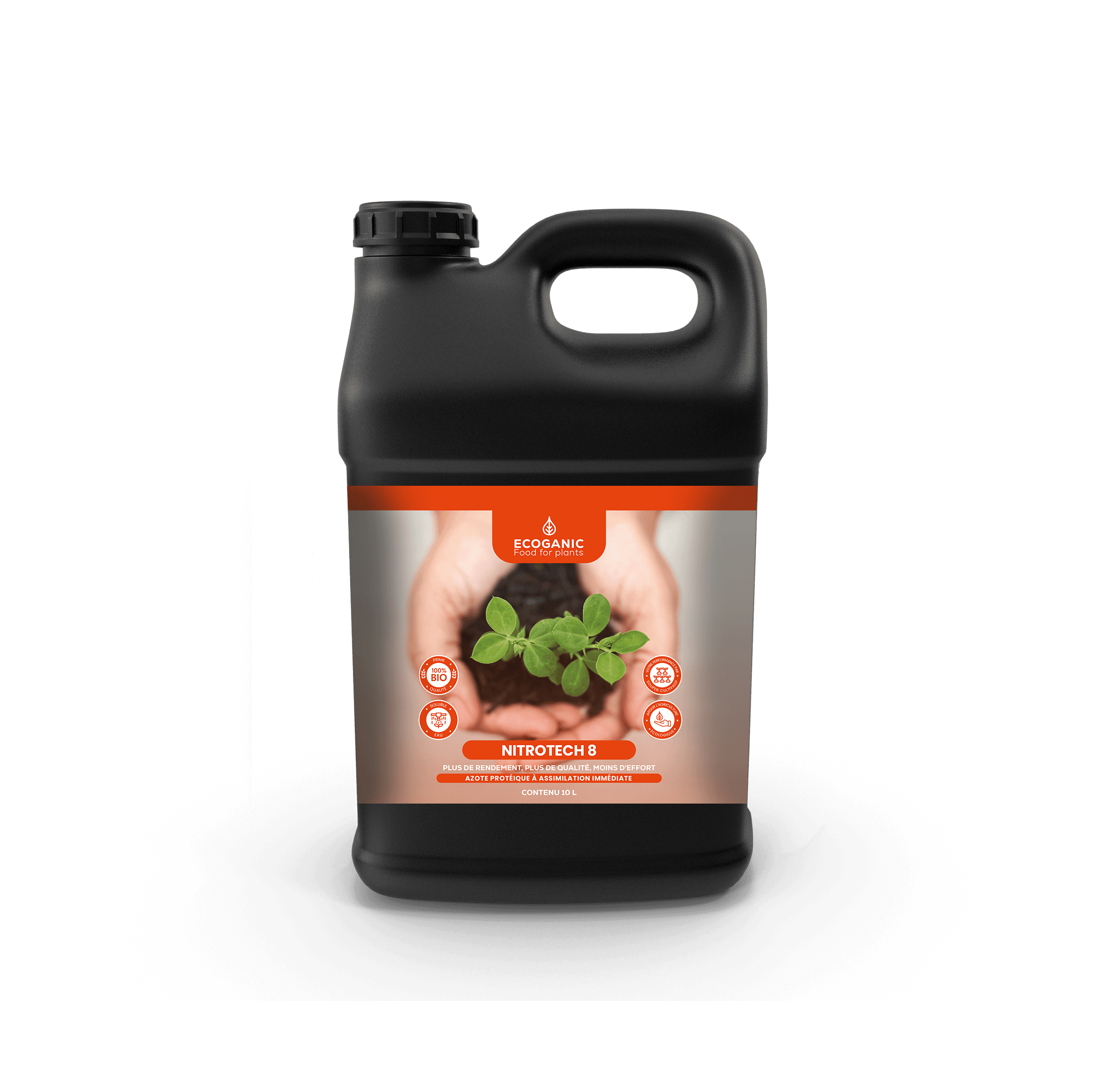
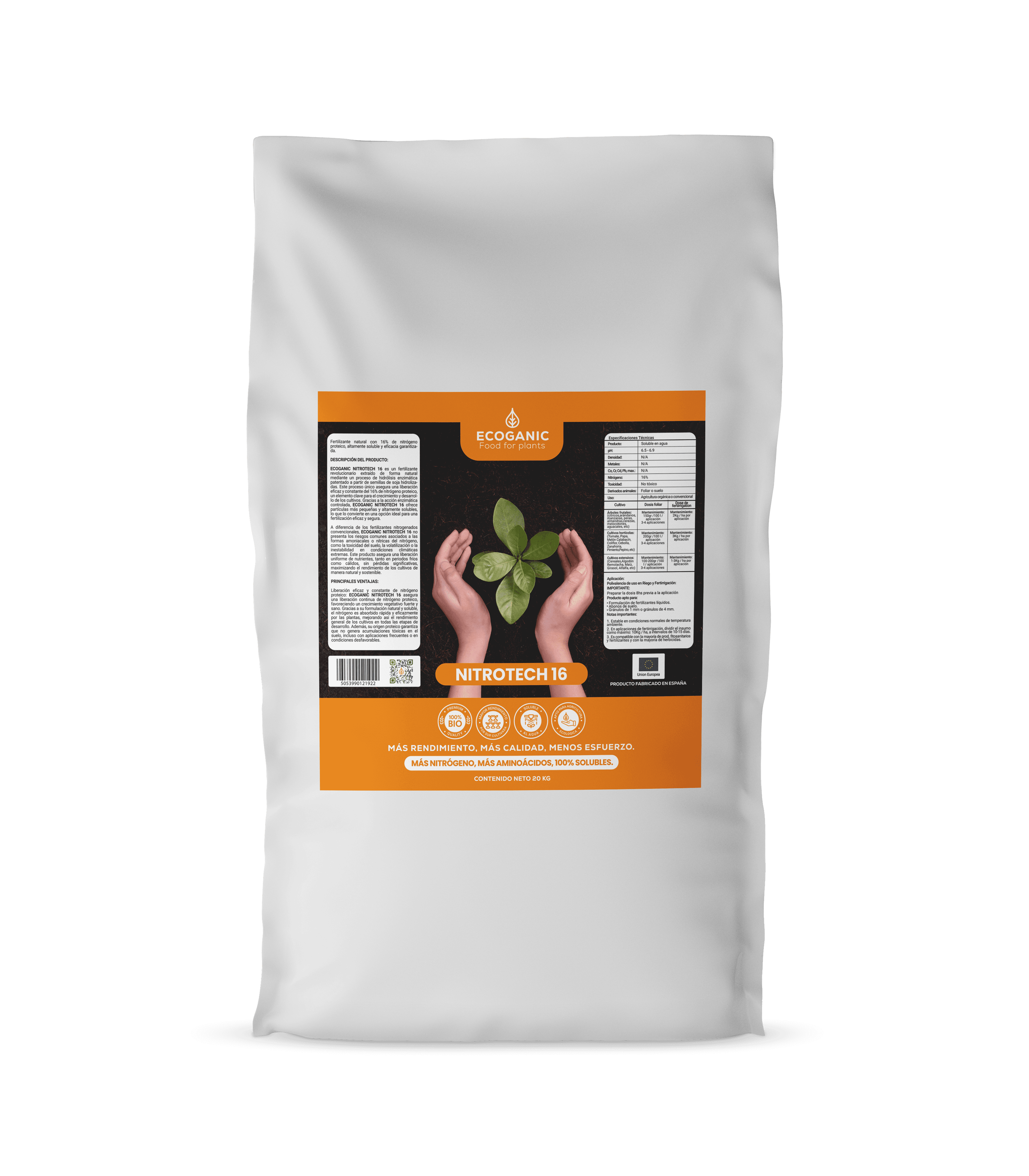
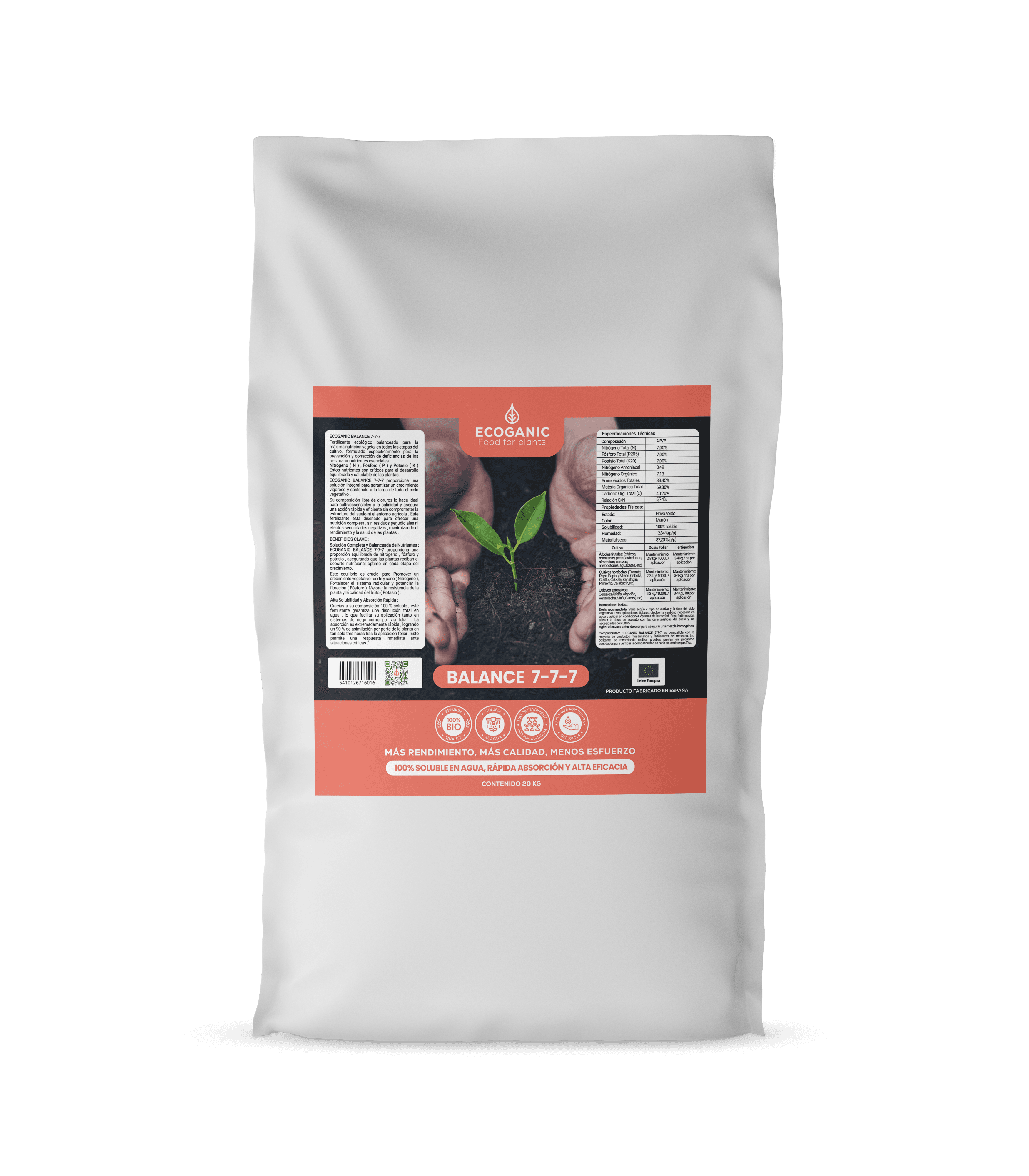
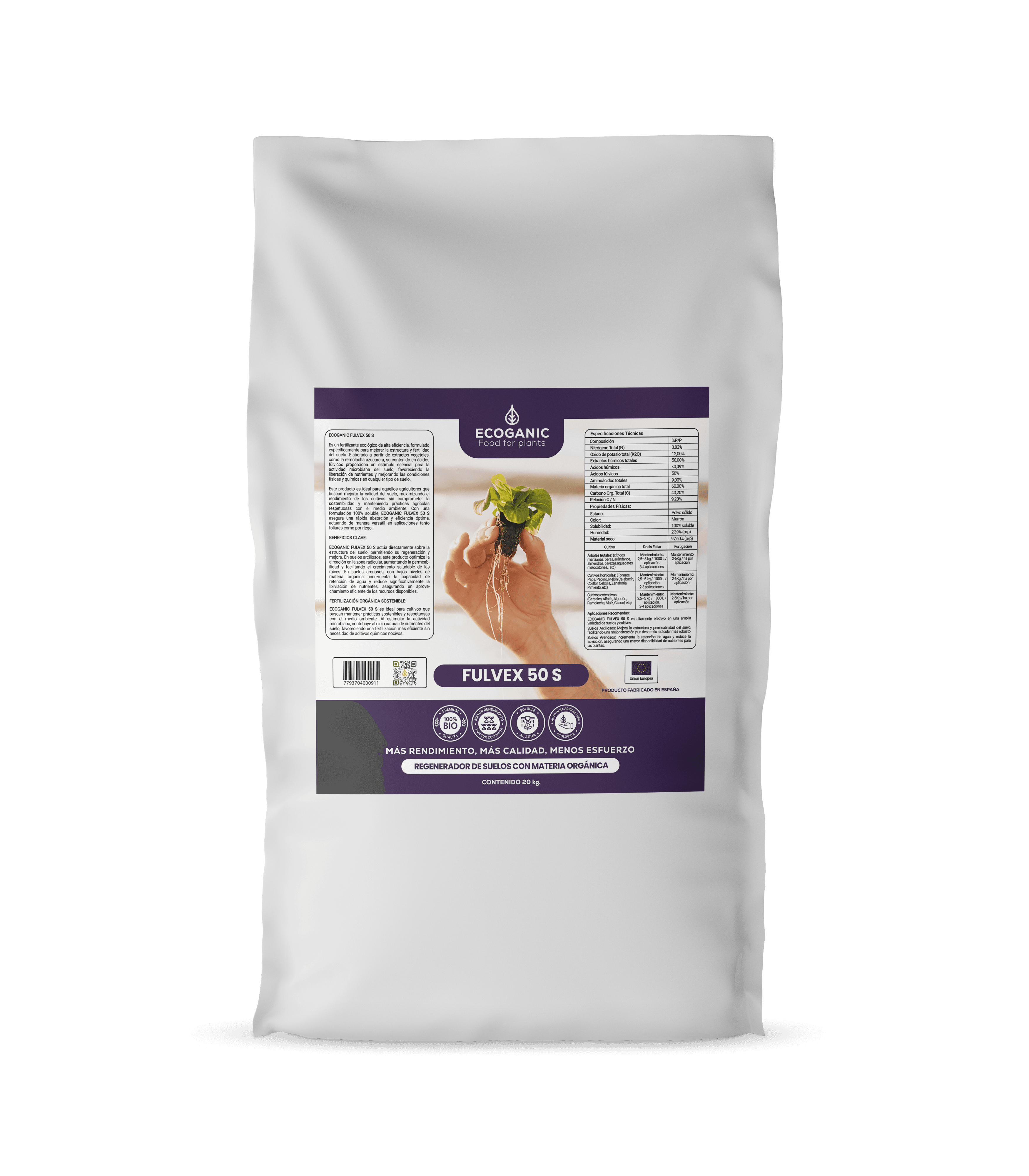
Ecoganic products with plant-origin amino acids
Five formulations with different concentrations and objectives, all based on L-amino acids from non-GMO soy obtained by enzymatic hydrolysis.
Argentine field crops
Argentine field crops: when and why to apply amino acids
Plant amino acids have greater impact in phenological windows of high metabolic demand or stress. Identifying those windows is the key to the program.
Soybean
R1 — Start of flowering
Reduction of flower drop and maximization of pods per plant. Amino acid N supports the high protein demand of the flower.
R3-R5 — Grain filling
Synthesis of reserve protein in the seed. Each mol of N directly assimilated from amino acids is energetically equivalent to 12 mol of nitric N.
Maize
V6-VT — Vegetative development
Tassel and silk formation. High N and micronutrient demand. Chelated amino acids guarantee Zn and Fe availability in soils with pH > 7.
Post-stress recovery
After hail or drought, a foliar amino acid application within 48h accelerates recovery and reduces vegetative stall time.
Wheat
Tillering — Z20-Z30
Stimulation of fertile tiller number. Amino acid N available in this short window (7-10 days) directly impacts the potential spikes/m².
Heading — flowering
Grain protein quality (gluten). N applied as amino acids at pre-heading directly reflects in grain protein percentage at harvest.
Grapevine
Bud break
Dormancy break and shoot push. Amino acids act as precursors of auxins and cytokinins that accelerate the start of vegetative growth.
Pre-bloom and fruit set
Maximization of fruit set. Proline and tryptophan applied at this stage reduce flower drop and improve cluster uniformity.
Citrus
Bud break-flowering
Citrus fruit set is especially sensitive to N and micronutrient deficiency. Amino-mineral chelates guarantee foliar availability of Fe and Zn at the critical moment.
Frequently asked questions about plant-origin amino acids
What is the difference between plant amino acids and animal-origin ones (feather hydrolysate)?
Plant-origin amino acids (soy, beet) have a more complete and balanced L-amino acid profile than animal-origin ones. Feather hydrolysates (keratin, keratolytic process) have high concentration of a single amino acid (glycine/proline) and may contain impurities from the acid hydrolysis process. Acid hydrolysis also destroys part of the amino acids converting them to the D-racemic form, not bioactive for the plant. Ecoganic uses exclusively non-GMO plant origin with enzymatic hydrolysis.
Do plant-origin amino acids replace conventional nitrogen fertilizers?
They do not replace them, but complement them and reduce the amount needed. Amino acid N is assimilated directly without the metabolic step of nitrate reduction (which consumes energy). This improves fertilization program efficiency without eliminating conventional N. The standard recommendation is to reduce conventional N dose by 20–30% at stages where amino acids are applied, maintaining total nutritional balance.
When is it most important to apply amino acids in soybean and maize?
In soybean, critical moments are R1 (start of flowering) to reduce flower drop and maximize pod number, and R3-R5 to support the N demand of grain filling. In maize, V6-VT for vegetative development and as post-stress recovery after hail or drought. In both crops, a preventive application at water stress stages (before drought forecast) has greater impact than a subsequent corrective application.
Are fertilizers with amino acids suitable for certified organic production under SENASA?
Yes, as long as the amino acids are of plant origin (not synthetic), the product is certified CE 2018/848 or NOP USDA, and the SENASA-authorized certifier of the establishment has approved the input. NITROTECH and BALANCE line products meet these requirements: certified CE 2018/848, NOP USDA and JAS, made from non-GMO soy without chemical synthesis, without chlorides and with full raw material traceability.
Why does amino acid concentration vary so much between products (9% in FULVEX 50S vs 91.59% in NITROTECH 16)?
Concentration reflects the functional objective of each product. NITROTECH 16 is a maximum-concentration nitrogen fertilizer based almost exclusively on amino acids as N source — that is its main function. FULVEX 50S is primarily a soil improver based on fulvic acids, where amino acids (9%) are a secondary component that enhances micronutrient chelation. The correct comparison is within the same functional line: in the nitrogen line, NITROTECH 10 has 35% and NITROTECH 16 has 91.59%.
Ecoganic
Want to know which product to use and when for your crop?
Certified CE 2018/848, NOP USDA and JAS. Non-GMO soy amino acids by enzymatic hydrolysis. Available in liquid and soluble powder format.