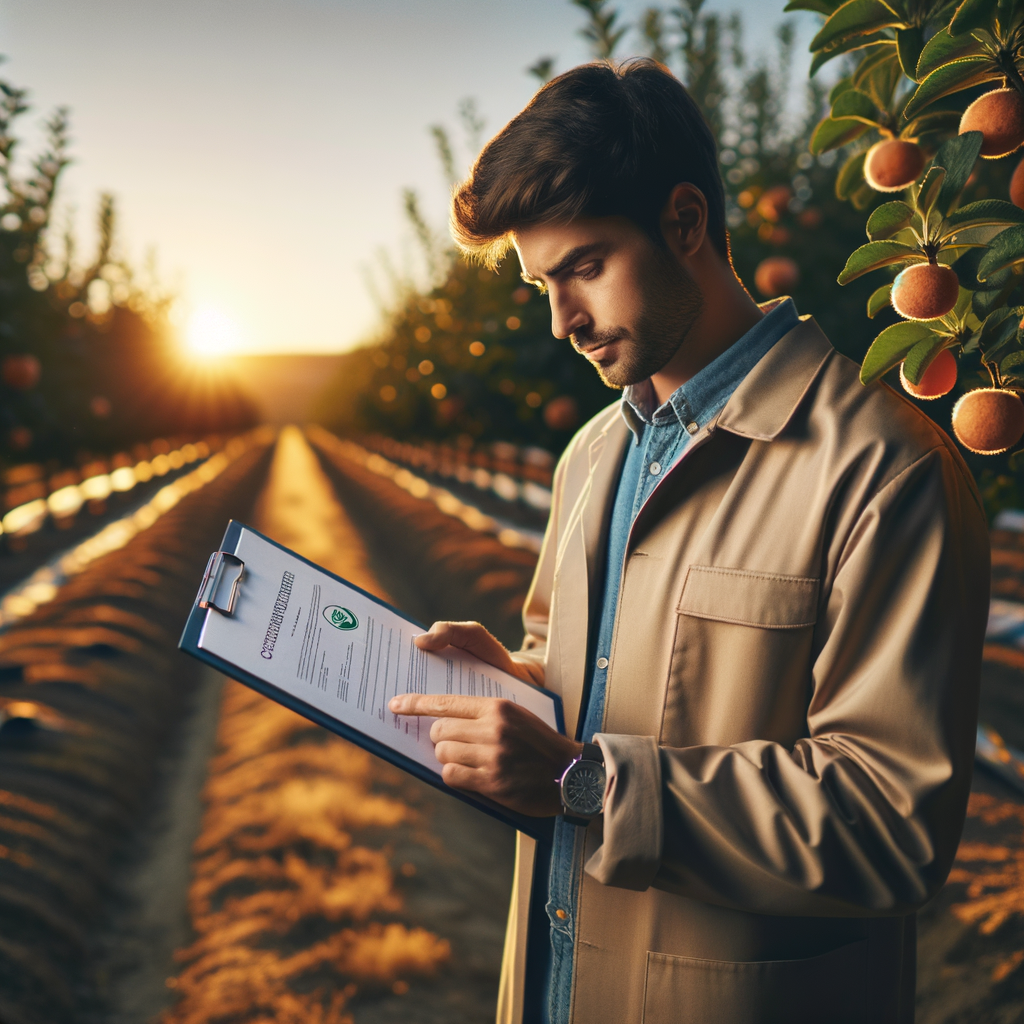
Learn about the use of organic fertilizers for fruit trees in Argentina. Application guide, doses, and benefits. Contact us for more information!
Introduction
The use of organic fertilizers for fruit trees has gained great relevance in current agriculture, especially in Argentina. These products, which promote the healthy development of crops, not only contribute to improving soil quality but are also essential for sustainable production. In this article, we will explore how to apply organic fertilizers for fruit trees, the appropriate doses, and the benefits these inputs provide in the Argentine agricultural context.
Benefits of Organic Fertilizer

Organic fertilizers are an effective and sustainable alternative to chemical products. Among their main benefits, the following stand out:
- Improvement of soil structure: They increase the capacity to retain water and nutrients. This is because organic matter improves soil porosity, facilitating the infiltration of water and air, which is crucial for the root development of fruit trees.
- Stimulation of microbial activity: They promote soil biodiversity and improve plant health. Microorganisms, such as bacteria and fungi, play a fundamental role in the decomposition of organic matter and in the availability of nutrients.
- Reduction of pollution: Being natural products, they reduce the risk of contamination of water bodies and soils. This is especially relevant in regions where intensive agriculture has led to environmental degradation.
- Economic benefits: The use of organic fertilizers can result in a decrease in long-term costs, thanks to better soil health and more resilient crops. A study conducted by the National University of La Plata indicates that crops treated with organic fertilizers can increase yield by 20-30% compared to those treated only with chemical fertilizers.
Improvement of Soil Health
The incorporation of organic fertilizers improves soil health through various mechanisms. One of the most important is the formation of soil aggregates. When organic matter, such as compost or manure, is applied, it promotes the binding of soil particles, improving structure and water retention capacity. Research has shown that soils with an adequate content of organic matter can increase their water retention capacity by 50%, which is fundamental in regions with extreme climatic variations. Additionally, organic matter acts as a reservoir of nutrients, releasing them slowly as plants require them.
Stimulation of Microbial Biodiversity
Organic fertilizers not only provide nutrients but also serve as a growing medium for beneficial microorganisms. These microorganisms decompose organic matter and release nutrients in forms that plants can assimilate. Studies have shown that the application of organic fertilizers can double the soil microorganism population compared to soils treated solely with chemical fertilizers. For example, research conducted in the province of Córdoba showed that the application of compost increased the soil bacteria population by 300%, resulting in a significant increase in nutrient availability for fruit trees.
Increase of Essential Nutrients
Organic fertilizers are rich in essential nutrients such as nitrogen, phosphorus, and potassium, in addition to other important micronutrients for the growth of fruit trees. For example, cow manure has an approximate content of 0.5% nitrogen, 0.2% phosphorus, and 0.5% potassium, making it an excellent resource for fertilization. Additionally, organic matter improves the availability of these nutrients by increasing microbial activity and the cation exchange capacity of the soil, allowing plants to absorb nutrients more efficiently. A study from the National University of Tucumán revealed that the application of vermicompost increased the available phosphorus content in the soil by 40% compared to untreated soils.
Reduction of Plant Diseases
The use of organic fertilizers has also been associated with a decrease in the incidence of diseases in fruit trees. This is because organic matter improves the overall health of plants, increasing their resistance to pathogens. A study conducted in the province of Tucumán demonstrated that fruit trees treated with compost showed a 40% lower incidence of fungal diseases compared to those that received chemical fertilizers. This effect is especially important in high-value crops such as citrus, where fruit quality can be affected by diseases. Additionally, the microbial diversity generated by organic fertilizers can compete with pathogens, reducing their ability to infect plants.
Application and Doses
The correct application of organic fertilizers is fundamental to maximize their benefits. Below are the recommended doses and methods:
Recommended Doses
The doses of organic fertilizers can vary depending on the type of fruit tree and soil conditions. However, as a general guideline, it is recommended:
- Deciduous fruit trees: Between 2 to 5 tons per hectare of compost or mature manure, applied before planting. For example, in the case of apple trees, it has been observed that a dose of 3 tons of compost per hectare results in a significant increase in fruit production. In a trial conducted in the province of Mendoza, an increase in production of up to 30% was documented with this dose.
- Evergreen fruit trees: Approximately 1 to 3 tons per hectare, distributed in two applications during the year. In the case of citrus, applying 2 tons of mature manure in spring and another in autumn can improve fruit quality and resistance to pests. A study in the Argentine coastal region showed that citrus fertilized with 2 tons of compost per hectare had a 25% higher fruit production than those without organic fertilization.
Application Methods
There are various techniques for applying organic fertilizers, among the most effective are:
- Incorporation into the soil: Mixing fertilizers with the soil before planting improves their availability for the roots. This method is especially effective in clay soils, where compaction can limit nutrient absorption. Incorporation can be done through plowing or by using specialized machinery that mixes the fertilizer into the topsoil.
- Foliar application: In some cases, it can be applied directly onto the leaves for quick absorption. This is useful in situations where an immediate nutrient supply is required, such as during the flowering period. A trial in the province of San Juan demonstrated that foliar application of seaweed extract increased flowering by 20% in peach trees.
- Drip irrigation: Dissolving fertilizers in irrigation water allows for uniform and efficient distribution. This method is ideal for greenhouse crops where precision in nutrient application is crucial. A study in greenhouses in Buenos Aires showed that fertigation with liquid compost increased tomato production by 30% compared to traditional application.
Practical Application Examples in the Field
In a study conducted in the province of Mendoza, 4 tons of compost per hectare were applied to a peach crop. The results showed a 25% increase in fruit yield compared to the control. Another case in the province of Buenos Aires involved the application of chicken manure in an apple crop, where an improvement in fruit quality and a reduction in the incidence of fungal diseases were observed. In an experiment in the Entre Ríos region, 3 tons of quality biological formulations were applied to a blueberry crop, resulting in a 35% increase in yield and a notable improvement in fruit size.
Climate Considerations in Application
The application of organic fertilizers should take into account local climatic conditions. For example, in regions with high rainfall, it is recommended to apply organic fertilizers during dry periods to avoid nutrient leaching. In contrast, in arid areas, it is essential to apply fertilizers before seasonal rains to maximize absorption by plants. Additionally, soil temperature also influences microbial activity; optimal temperatures between 15-30°C favor the decomposition of organic matter. An analysis of climatic data in the Cuyo region suggests that using organic fertilizers in spring, before the onset of rains, can significantly improve nutrient retention and plant growth.
Related Articles
Need professional help?
In in Argentina, Latin America, we offer agriculture. Call us: +54 11 0000 0000.
Regulatory Compliance in Argentina
In Argentina, the use of organic fertilizers is regulated by SENASA, which establishes regulations to ensure the quality and safety of these products. It is important for farmers to be aware of current regulations to ensure compliance and the effectiveness of the inputs used. SENASA certification guarantees that fertilizers meet the necessary standards for use in organic agriculture.
To obtain certified products and ensure their quality, it is recommended to consult the SENASA page and follow the established guidelines. This not only ensures the quality of the fertilizer but also provides confidence to the end consumer. Additionally, compliance with these regulations can open doors to international markets that value organic production.
Specific Regulations for Organic Production
SENASA regulations specify that organic fertilizers must be made from raw materials that do not contain contaminants. For example, food industry waste, such as fruit and vegetable peels, can be used for compost production as long as they are free from pesticides and heavy metals. It is also important for producers to maintain records of organic fertilizer applications, which facilitates traceability and regulatory compliance. In a case study in the province of Santa Fe, it was observed that producers who followed SENASA regulations were able to access organic markets and increased their income by 40% compared to those who did not comply with such regulations.
Benefits of Organic Certification
Organic certification not only guarantees the quality of products but also allows farmers to access better prices in the market. According to a report from the Ministry of Agriculture, Livestock, and Fisheries, organic products can reach prices up to 30% higher compared to conventional products. Additionally, consumers are increasingly interested in products that are not only healthy but also sustainable and environmentally friendly. A market trend analysis in Buenos Aires showed that 60% of consumers prefer organic products, representing a significant opportunity for producers who opt for certification.
Challenges in Regulatory Compliance
Despite the benefits, farmers face challenges in complying with SENASA regulations. The lack of information and training on organic fertilizer production is a common obstacle. Therefore, it is recommended that farmers participate in workshops and training offered by local institutions and universities. These initiatives not only provide technical knowledge but also foster the exchange of experiences among producers. A program in the province of Jujuy has demonstrated that continuous training can increase the adoption of organic fertilization practices by 50% among participating producers.
Impact of Organic Agriculture on the Environment
The use of organic fertilizers has a significant positive impact on the environment. According to a study by the National Institute of Agricultural Technology (INTA), the adoption of organic farming practices can reduce the carbon footprint of agricultural operations by 30-50%. This is because organic fertilizers, being natural products, do not contribute to the accumulation of nitrogen and phosphorus in soil and water, common problems in conventional agriculture. Additionally, the use of cover crops and crop rotation, common practices in organic agriculture, also contributes to improving biodiversity and ecosystem stability. A case study in the province of Misiones indicated that implementing organic practices on 20% of agricultural land can restore local biodiversity within a period of 5 years.
Research on Organic Fertilizers
Research on the use of organic fertilizers has grown in recent decades, with multiple studies demonstrating their benefits. For example, a study conducted by the National University of Río Cuarto revealed that the application of quality biological formulations, which are an advanced form of organic fertilizers, increased the yield of fruit trees by 40% under water stress conditions. Quality biological formulations, which include beneficial microorganisms, not only improve nutrient availability but also promote more robust plant growth by increasing resistance to adverse conditions. Another research in the Greater Buenos Aires region showed that quality biological formulations applied to pear crops increased the sugar content in the fruit, thus improving its commercial quality.
Future Perspectives
The growing demand for organic products in the global market presents a significant opportunity for Argentine farmers. It is expected that in the coming years, the production and use of organic fertilizers will continue to increase, driven by sustainable agricultural policies and consumer demand. Additionally, research and development of new organic fertilizers that incorporate advanced technologies such as the use of agro-industrial waste could offer innovative solutions to improve fertilization of fruit trees and other crops. Training farmers in these new technologies will be key to their successful adoption. A report from the Ministry of Agriculture estimates that the adoption of organic fertilizers and sustainable practices could increase agricultural production by 20% in the next five years, thus contributing to greater food security in the country.
Innovations in Organic Fertilizers
In recent years, there has been an increase in the research and development of innovative organic fertilizers, such as seaweed-based fertilizers and biostimulants. Seaweed fertilizers, for example, are rich in micronutrients and plant hormones that promote plant growth. A study conducted in the province of Santa Cruz showed that the use of seaweed extract in fruit trees increased root growth by 25% and improved resistance to water stress conditions. On the other hand, biostimulants, which are natural substances that stimulate biological processes in plants, have been shown to increase nutrient use efficiency and improve fruit quality. Research in the Patagonia region indicated that the application of biostimulants in apple crops resulted in a 15% increase in fruit size and an improvement in antioxidant content.
Collaboration between Producers and Universities
The collaboration between agricultural producers and universities has been fundamental for the development of effective organic fertilizer use practices. Joint projects have allowed for field trials that evaluate the effectiveness of different types of organic fertilizers in various crops. For example, a program in the province of Tucumán has involved local producers in evaluating composting of organic waste, resulting in a 30% increase in the use of organic fertilizers in the region. This synergy not only improves agricultural production but also strengthens the training and technical knowledge of farmers.
Education and Environmental Awareness
Education and awareness about the benefits of organic fertilizers are crucial for their widespread adoption. Awareness campaigns that highlight the environmental and economic advantages of using organic fertilizers have proven effective. A case study in the province of Neuquén showed that informational talks and workshops on sustainable agricultural practices increased the adoption of organic fertilizers by 40% among local farmers. This reflects a growing awareness of the importance of agricultural practices that not only increase production but also care for the environment.
Related Articles
- Home
- Biological Fertilizers for Corn: Advantages and SENASA Certification
- Regenerative Agriculture in Rice: Advanced Agricultural Solutions
Frequently Asked Questions
What are organic fertilizers?
Organic fertilizers are natural products used to enrich the soil and improve plant health.
What is the difference between organic and chemical fertilizers?
Organic fertilizers come from natural sources and improve soil health, while chemical fertilizers are synthetic and can negatively affect the environment in the long term.
How do organic fertilizers affect fruit production?
Organic fertilizers improve soil quality, which in turn translates into healthier growth of fruit trees and greater production of quality fruit.
Is it necessary to follow regulations to use organic fertilizers?
Yes, it is essential to follow the regulations established by SENASA to ensure the quality and safety of products used in organic agriculture.