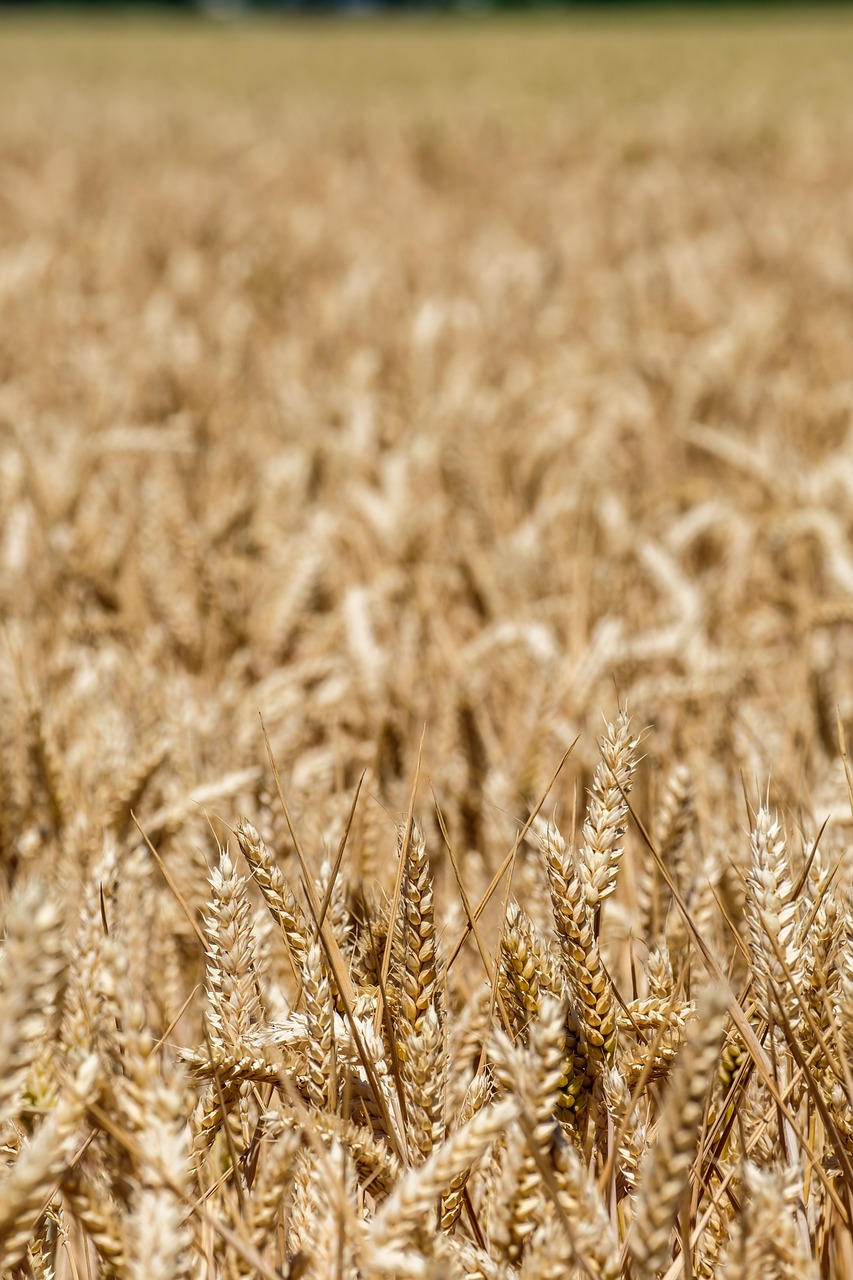
Discover the complete guide on organic fertilizer for wheat in Argentina. Learn about dosages, benefits, and how to comply with SENASA regulations.
Introduction
The use of organic fertilizer for wheat in Argentina has become a key practice to optimize agricultural production, ensuring sustainability and soil health. With the growing interest in organic farming, it is essential to know the best application practices, appropriate dosages, and the benefits that this type of fertilization can offer. In this article, we will thoroughly explore the use of organic fertilizers in wheat cultivation, ensuring that producers are informed about how to maximize their yield.
Benefits of organic fertilizer

Organic fertilizers provide numerous benefits for wheat cultivation, among which are:
- Improvement of soil structure: Organic fertilizers help increase the organic matter of the soil, improving its structure and water retention. This is essential in arid and semi-arid regions of Argentina, where moisture retention capacity can be a limiting factor in crop growth. An increase of 1% in soil organic matter can enhance water retention capacity by up to 150,000 liters per hectare.
- Increase in microbial biodiversity: They promote a healthy environment for beneficial microorganisms that contribute to soil and plant health. Studies have shown that the application of organic compost can increase the population of beneficial bacteria by up to 50%. Additionally, microbial diversity is crucial for the decomposition of organic matter and nutrient availability.
- Reduction of chemical use: By opting for organic fertilizers, dependence on chemical inputs is reduced, which also contributes to a healthier environment. This is particularly relevant in areas where water pollution is a growing problem. It has been estimated that reducing the use of chemical fertilizers can decrease water body pollution by 40%.
- Better quality of crops: Products obtained from crops fertilized with organic fertilizers often exhibit better nutritional and organoleptic characteristics. A study conducted by the Faculty of Agronomy at UBA found that organic wheat had a protein content 15% higher than conventional wheat, along with better texture and flavor.
Specific benefits for wheat
When applied correctly, organic fertilizer can:
- Stimulate root growth, allowing wheat plants to access more nutrients and water. This translates into a yield increase of up to 20% under optimal conditions. A study in the Buenos Aires region showed that the use of compost increased root length by 30%.
- Increase disease resistance, improving the overall health of the crops. For example, organically fertilized wheat crops showed a reduction in the incidence of diseases such as rust by up to 30% compared to those treated with chemical fertilizers. This is because soils rich in organic matter favor the activity of antagonistic microorganisms.
- Produce higher quality grains, which is essential for the market. Organic wheat grains generally have a higher mineral content, such as zinc and iron, important for human health. Recent studies have shown that wheat grown with organic fertilizers can contain up to 25% more zinc.
- Contribute to the balance of soil pH, favoring nutrient availability. An adequate pH facilitates the absorption of essential nutrients such as phosphorus, which is crucial for root development and wheat flowering. The application of compost can help stabilize pH, keeping it at optimal levels for cultivation.
Impact on soil quality
The application of organic fertilizers not only benefits wheat cultivation but also improves the overall quality of the soil. In the long term, the incorporation of organic matter through organic fertilizers can increase the cation exchange capacity (CEC) of the soil, allowing for greater retention of essential nutrients. This is especially important in low-fertility soils, where CEC may be limited. Studies indicate that regular application of compost can increase CEC by 40%, resulting in greater nutrient availability for plants.
Dosage and application
The correct application of organic fertilizers is crucial for achieving optimal results. Below are the recommended dosages and best application practices:
Recommended dosage
The dosages of organic fertilizers can vary depending on the type of product and soil conditions. However, as a general guideline, it is recommended to apply between 2,000 to 4,000 kg per hectare. It is important to conduct a soil analysis beforehand to adjust these figures to the specific needs of the crop. A soil analysis can reveal the concentration of available nutrients and help determine the exact amount of organic fertilizer needed to optimize wheat yield. A study by INTA suggests that applying 3,500 kg/ha of compost may be ideal for soils deficient in organic matter.
Application timing
The application of organic fertilizers should be done at strategic moments:
- Before sowing: Incorporating the fertilizer into the soil before sowing ensures that plants have immediate access to nutrients. This process may include the application of compost or manure, which should be properly mixed with the soil to ensure its decomposition and availability for the roots. Studies indicate that incorporating fertilizer into the soil before sowing can increase germination rates by 15%.
- During the growth cycle: Additional applications can be made at critical stages, such as stem elongation and flowering, to maximize yield. At these stages, a liquid organic fertilizer can be used, applied through drip irrigation or spraying, ensuring uniform and efficient distribution. The foliar application of organic extracts can increase photosynthesis and, consequently, the final yield of the crop. For example, a study in the Entre Ríos region showed that the foliar application of a seaweed-based biofertilizer increased biomass production by 18% during the flowering phase.
Best application practices
To ensure adequate nutrient absorption:
- Properly incorporate into the soil using plows or cultivators. This not only helps mix the fertilizer with the soil but also improves aeration and soil structure. A study in Córdoba demonstrated that proper incorporation of compost can increase soil porosity by 20%.
- Avoid application on days of heavy rain to prevent nutrient loss. It is recommended to monitor weather forecasts and apply on dry days to maximize efficiency. Nutrient leaching can be a significant problem in sandy soils, where it is estimated that up to 40% of nitrogen can be lost after heavy rains.
- Monitor crop status and adjust dosages as necessary. Using leaf nutrient analysis tools can provide valuable information about crop health and the need for additional fertilization. An analysis during the stem elongation phenological stage can accurately indicate whether an additional nutrient application is required.
- Implement crop rotation and conservation practices, such as using cover crops, which can improve soil health and the efficiency of organic fertilizers. A study in northern La Pampa showed that rotation with legumes increased nitrogen availability in the soil, benefiting the wheat crop in the following cycle.
- Use precision agriculture techniques, such as satellite monitoring and moisture sensors, to determine the exact amount of fertilizer needed based on soil variability. This can result in cost reduction and more efficient resource use.
SENASA regulations
Compliance with the regulations of the National Service of Agrifood Health and Quality (SENASA) is essential to ensure the quality of agricultural products in Argentina. Organic fertilizers must be registered and comply with the technical specifications established by SENASA for use in crops.
Additionally, producers must ensure that the products they use are properly certified, which guarantees that they meet quality and safety standards. For more information on current regulations, you can consult the SENASA website. Compliance with these regulations is not only mandatory but can also influence the marketing of products, as consumers are increasingly interested in the traceability and sustainability of the foods they consume.
Conclusion
The use of organic fertilizers in wheat cultivation in Argentina not only contributes to agricultural sustainability but also improves crop quality and soil health. With proper application and adherence to SENASA regulations, producers can maximize their yield and contribute to more responsible and conscious agriculture.
If you are interested in improving your agricultural practices and need advice on the use of organic fertilizers, contact us for more information.
Considerations for choosing organic fertilizers
It is crucial to select the correct type of organic fertilizer for wheat cultivation. There are various options available, each with specific characteristics and benefits. Below are some of the most commonly used in Argentina:
Compost
Compost is one of the most common organic fertilizers. It is obtained from the decomposition of organic matter, such as crop residues, manure, and other organic waste. This process is carried out through microbial activity, which transforms organic matter into a nutrient-rich product. Compost provides nitrogen, phosphorus, and potassium, in addition to improving soil structure and increasing its water retention capacity. In a study conducted in La Pampa, it was observed that the application of compost increased wheat production by 25% compared to untreated soils. Additionally, the use of compost can reduce soil erosion by 20%, which is especially relevant in areas with steep slopes.
Manure
Manure, coming from animals such as cows, pigs, and birds, is another important source of nutrients. It contains a high concentration of nitrogen and other macro and micronutrients. However, it is essential to apply well-decomposed manure to avoid phytotoxicity issues. The application of manure in wheat cultivation not only improves soil fertility but can also increase its biological activity. A study in the province of Córdoba demonstrated that the application of manure increased wheat production by 30% compared to the exclusive use of chemical fertilizers. The mineralization of nitrogen in manure can release up to 60% of its content within a 90-day period, which is beneficial for the initial growth of the crop.
Biofertilizers
Biofertilizers are preparations that contain live microorganisms that promote plant growth by increasing nutrient availability. These may include nitrogen-fixing bacteria, mycorrhizal fungi, and other beneficial microorganisms. The application of biofertilizers in wheat has shown positive results, such as increased yield and improved grain quality. A study conducted in the Buenos Aires region reported a 15% increase in wheat production after the application of a biofertilizer containing nitrogen-fixing bacteria. Additionally, biofertilizers can enhance plant resistance to stress conditions, such as drought or saline soils, which is crucial in the context of climate change.
Environmental impact of organic fertilizers
The use of organic fertilizers not only benefits agricultural production but also has a positive impact on the environment. Conventional agriculture, which relies heavily on chemical fertilizers, can lead to water pollution and soil degradation. In contrast, organic fertilizers improve soil health and promote biodiversity, contributing to the long-term sustainability of agricultural ecosystems.
Furthermore, organic fertilizers help sequester carbon in the soil, which can play an important role in mitigating climate change. Increasing organic matter in the soil not only improves fertility but can also reduce greenhouse gas emissions. According to a study by INTA, the incorporation of organic matter can reduce CO2 emissions by 30% compared to soils that do not receive such treatments. Therefore, the use of organic fertilizers is not only beneficial for crops but also contributes to the fight against climate change.
Practical application examples in the field
The implementation of organic fertilizers in wheat cultivation has been successfully tested in different regions of Argentina. Below are some case studies:
Case study in Mendoza
On a farm in Mendoza, an experiment was conducted comparing wheat yields under two treatments: one with organic fertilization (compost) and another with chemical fertilization. The results showed that organically fertilized wheat achieved a yield of 4,500 kg/ha, while the chemical treatment reached 4,200 kg/ha. Additionally, organic wheat exhibited a better nutritional profile, with higher protein content. This case demonstrates that organic fertilization is not only viable but can also be more profitable in the long run.
Experience in Santa Fe
In Santa Fe, a farmer decided to implement an organic fertilization program using a combination of manure and compost. After one year of application, a 35% increase in wheat production was reported, as well as a notable improvement in soil quality, evidenced by increased water retention capacity and greater microbial activity. This experience underscores the importance of using a combination of organic inputs to maximize benefits.
Results in Córdoba
A group of farmers in Córdoba carried out a pilot project using biofertilizers in their wheat crop. The results showed a 20% increase in yield and a reduction in the incidence of pests and diseases, demonstrating the potential of biofertilizers to improve the overall health of the crop and reduce the need for pesticides. This integrated approach is an example of how farmers can adopt more sustainable practices.
Related articles
Need professional help?
At in Argentina, Latin America, we offer agriculture. Call us: +54 11 0000 0000.
Final conclusions
The use of organic fertilizers in wheat cultivation in Argentina represents an effective strategy to improve agricultural production and contribute to environmental sustainability. With a proper selection of products, a prior soil analysis, and application at strategic moments, producers can maximize the benefits of these inputs. Evidence from case studies demonstrates that organic fertilizers not only increase yield but also improve soil and crop quality, which is essential for the future of agriculture in the country.
The transition to the use of organic fertilizers is a step towards a more sustainable and responsible agricultural system, offering both economic and environmental benefits. If you are interested in implementing these practices on your farm, do not hesitate to seek additional advice and training to ensure the success of your crops.
Related articles
- Home
- Biological Fertilizers for Corn: Advantages and SENASA Certification
Frequently Asked Questions
What are organic fertilizers?
Organic fertilizers are products derived from organic matter used to enrich the soil and improve plant growth.
What are the benefits of using organic fertilizers in wheat?
They improve soil structure, increase microbial biodiversity, and reduce dependence on chemical inputs.
How should organic fertilizer be applied?
It is recommended to apply it before sowing and during critical growth moments, incorporating it well into the soil.
Where can I find information about SENASA regulations?
You can consult the SENASA website for information about the regulations and requirements for using organic fertilizers.